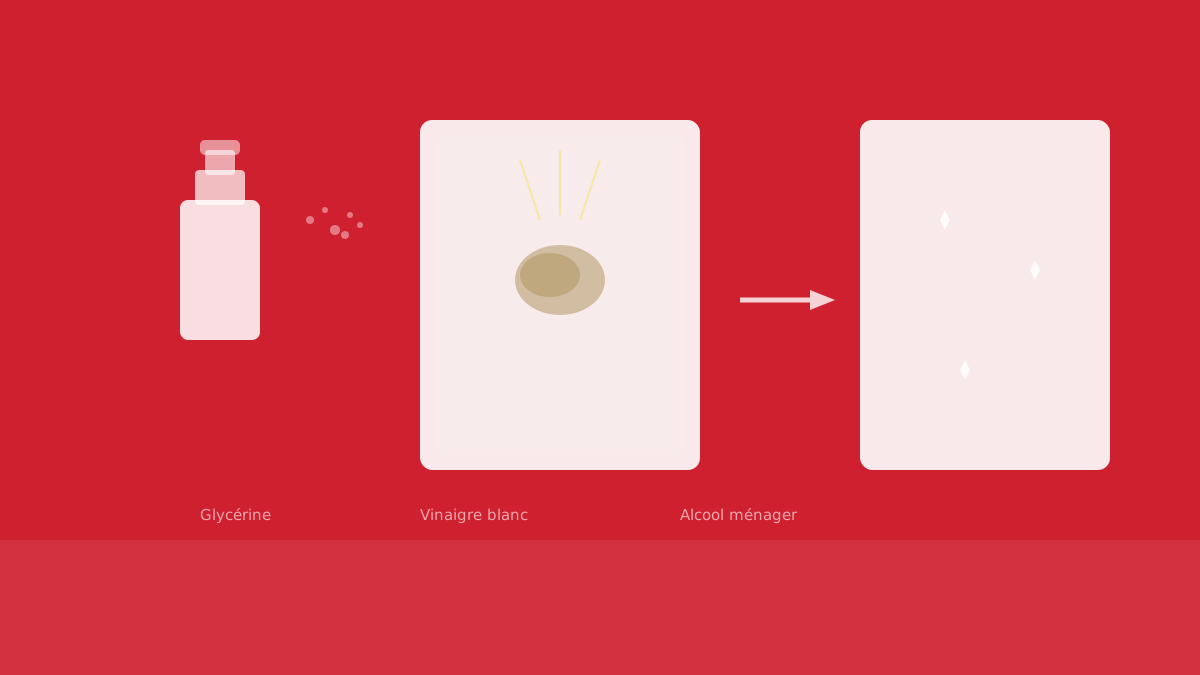
In short: perfume stains because of its essential oils and dyes, which brown in sunlight (photochemical oxidation). Fresh stain: dab with rubbing alcohol. Old stain (brown): glycerine 30 min + white vinegar. Silk: cold water + mild shampoo only (no alcohol). Prevention: spray on skin, not on clothes.
At a glance
Perfume stains by sun oxidation — essential oils brown under UV.
Fresh stain = rubbing alcohol — dab, do not rub.
Old stain = glycerine + vinegar — glycerine softens the oxidised compounds.
Silk = never use alcohol — cold water and mild shampoo only.
Prevention — perfume on skin, let dry 30 s before dressing.
Why perfume stains clothes
Most people do not realise that perfume can stain — the alcohol evaporates and the garment seems fine. But the compounds that remain on the fabric after the alcohol evaporates are the real culprits.
The three staining components
A classic perfume (eau de parfum) contains:
- Ethyl alcohol (60-80%) — evaporates quickly, may leave a temporary ring on sensitive fabrics (silk).
- Essential oils and aromatic compounds (15-30%) — the scent molecules. They deposit on fibres and fix there. They are responsible for the brown stain after sun exposure.
- Dyes (trace) — amber, woody and oriental perfumes often contain dyes that contribute to the stain.
The brown stain mechanism
The characteristic perfume stain — a brown-yellow mark that appears after a few days — is the result of a photochemical reaction. UV rays from the sun oxidise the essential oils deposited on the fabric. This oxidation produces brown compounds (peroxides, aldehydes) that bond to the fibres. This is why the stain often appears after sun-drying or outdoor wear — not immediately after spraying.
This mechanism is similar to how a cut apple browns in the air: oxidation of organic compounds by oxygen and UV.
Fresh stain: immediate treatment
A fresh perfume stain (sprayed a few hours ago, not yet exposed to the sun) is relatively easy to treat. The essential oils have not yet been oxidised by UV.
Dab with rubbing alcohol — soak a cotton pad and dab from the edge towards the centre of the affected area.
Change cotton pads regularly — the pad absorbs the oils; use a clean one every 30 seconds.
Rinse with cold water — after dabbing, rinse to remove alcohol and oil residues.
Wash at 30 °C — normal cycle with your usual detergent.
Rubbing alcohol (denatured ethanol) redissolves the essential oils and aromatic compounds of perfume thanks to chemical affinity: alcohol is a good solvent for organic aromatic compounds. The same principle as for ballpoint ink stains.
Do not confuse rubbing alcohol with methylated spirits
Rubbing alcohol (denatured ethanol) is the right product for textile stain removal. Methylated spirits (heavily denatured) may contain additives that stain the fabric. When in doubt, use 90% isopropyl alcohol from the pharmacy — it is pure ethanol, the safest for textiles.
Old stain (brown): glycerine + white vinegar
If the stain has browned due to sunlight, alcohol alone is no longer enough. The compounds are oxidised and fixed to the fibres. They need to be softened before being dissolved.
Step 1: glycerine
Glycerine↗ (glycerol) is a trihydroxy alcohol with a dual affinity: it mixes with water AND oils. This amphiphilic property allows it to penetrate the brown oxidised compound and soften it from the inside.
- Apply pure glycerine (pharmacy, cosmetics aisle, ~3 euros) to the stain.
- Massage gently with your fingertips to help it penetrate.
- Leave for 30 minutes — glycerine needs time to penetrate the oxidised residues.
Step 2: white vinegar
After glycerine, dab with a cloth soaked in white vinegar diluted (50/50 water-vinegar). Vinegar (acetic acid):
- Neutralises the alkaline residues of the glycerine.
- Dissolves some of the remaining oxidised compounds.
- Lightens the residual stain through its acid action.
Rinse with cold water, then wash at 30 °C.
Step 3 (if necessary): hydrogen peroxide on white cotton
If the stain persists on white cotton only:
- Apply a few drops of 3% hydrogen peroxide (pharmacy) to the stain.
- Leave for 10 minutes.
- Rinse thoroughly.
- Wash at 30 °C.
Hydrogen peroxide (H2O2) is a mild oxidising agent that decomposes the remaining brown pigments. Caution: it can bleach coloured fabrics — always test on an inner hem first.
Treatment by fabric
Each fabric reacts differently to perfume and stain removal products. Adapting treatment to the fabric avoids making things worse.
Silk — the most vulnerable
Silk is porous and deeply absorbs perfume oils. Rubbing alcohol damages fibroin — DO NOT use it on silk. Dab immediately with cold water and a mild shampoo (neutral pH). If the stain has browned, apply glycerine (30 min) then rinse with cold vinegar water (1 tbsp per litre). On silk, an old perfume stain may be irreversible — consult a specialist dry cleaner.
White cotton
The easiest to treat. Rubbing alcohol for a fresh stain, glycerine + vinegar for an old stain, hydrogen peroxide (3%) as a last resort. White cotton tolerates all these products without risk. For persistent traces, see our guide to whitening yellowed laundry.
Coloured cotton
Same protocol as white cotton EXCEPT hydrogen peroxide, which can bleach. Test rubbing alcohol on an inner hem — some dyes are sensitive to alcohol. Glycerine + vinegar is the safest method for coloured cotton.
Polyester
The most resistant fabric to perfume stains. Its smooth, low-porosity surface retains less oil. Rubbing alcohol works very well. A simple 30 °C wash often suffices for light stains.
Wool
Wool absorbs perfume oils in its keratin scales. Use glycerine (30 min) then dab with diluted white vinegar. Do not rub — wool felts under pressure. Rinse gently with cold water. See our delicate textiles guide.
Viscose / rayon
Viscose is fragile when wet (40-50% strength loss). Dab very gently with glycerine, rinse with cold water. No alcohol (risk of ring marks). Dry flat.
Common scenarios
Perfume sprayed directly on a silk scarf
This is the most problematic scenario. Silk immediately absorbs the perfume oils. If you did it a few minutes ago: dab with cold water and a mild shampoo, rinse thoroughly. If the stain has already browned: glycerine 30 min + vinegar water rinse. If the stain persists, professional cleaning is recommended. Also see our guide to washing a silk scarf.
Perfume mark on a white shirt collar
The collar often combines perfume + sebum + makeup traces. Treat the perfume first (rubbing alcohol), then the sebum (a drop of dish soap, rub gently). See our guide to removing makeup stains if cosmetic traces are also present. Wash at 30-40 °C.
Old brown stain on a white t-shirt
The stain has had time to oxidise in the sun. Pure glycerine (30 min), white vinegar↗ (dabbing), then 3% hydrogen peroxide if the stain resists (10 min contact). Wash at 30 °C. If the stain does not come out completely, a 2h soak in [sodium percarbonate](/blog/percarbonate↗-de-soude-linge/) (2 tbsp per litre of warm water) can help whiten residues.
Perfume on a wool suit
Wool requires gentleness. Glycerine on the stain (30 min), dab with diluted white vinegar, rinse with cold water. If the suit is lined or structured, professional dry cleaning is preferable to avoid distortion. Also see our guide to washing a suit.
Prevention: how to avoid perfume stains
The best solution is not to stain in the first place. A few simple habits eliminate the problem at source.
Spray on skin, not on clothes
Pulse points — wrists, neck, behind the ears, inner elbows — diffuse perfume through body heat. This is more effective for fragrance longevity AND avoids contact with fabric.
Let it dry before dressing
If you spray perfume then immediately put on a garment, the still-wet oils transfer to the fabric. Wait 30 seconds for the alcohol to evaporate and the oils to fix on the skin.
Spray from a distance on clothes
If you prefer to spray on clothes (scarf, coat collar), do so from 20-30 cm away for a fine, even mist. The oil concentration is lower than a close-range spray.
Avoid sunlight after spraying
The combination of perfume on fabric + sun exposure is the exact recipe for a brown stain. If you have sprayed perfume on a garment, avoid direct sun exposure in the hours that follow.
Indoor perfumes and scented candles
Indoor perfumes (sprays, diffusers) and scented candles can also stain textiles through projection or aromatic vapour deposit. The mechanism is the same: essential oils + UV = brown stain.
- Room spray: if you sprayed on a curtain or sofa, dab immediately with rubbing alcohol (if the fabric allows) or glycerine.
- Scented candle: wax + perfume creates a double stain. Treat the wax stain first (cold + scraping + absorbent paper + warm iron), then the residual perfume stain (glycerine + vinegar).
Mistakes to avoid
- Rubbing the stain — you spread the oils and push them deeper into the fibres. Always dab.
- Using alcohol on silk — alcohol partially dissolves fibroin and can leave an irreversible white mark.
- Tumble drying before checking — heat sets untreated perfume residues.
- Using bleach — it further oxidises already-oxidised compounds and can yellow the fabric.
- Spraying perfume in sunlight on a garment — the direct combination that produces the brown stain.
- Ignoring the 'invisible' stain — fresh perfume is colourless, but will brown after sun exposure. Treat preventively.
Prevention: applying perfume without staining
The best solution is to avoid the stain altogether. A few simple habits change everything.
Spray perfume on the skin (wrists, neck, behind the ears) before dressing, never on clothes. The alcohol evaporates in seconds on skin, but has time to penetrate fabric fibres. If you must perfume your clothes, spray from 20-30 cm away on the inside of the garment (lining, hem) rather than on the visible outer face.
Avoid perfuming delicate textiles (silk, satin, wool) which are the most vulnerable to alcohol and essential oil stains. For silk scarves, prefer a solid perfume applied to the skin under the scarf — the fabric will pick up the fragrance by proximity without direct contact with solvents.
As an Amazon Partner, we earn a small commission on purchases made through the affiliate links in this article — at no extra cost to you. This helps us maintain this site and produce free guides.
Our laundromats in Blagnac, Croix-Daurade and Montaudran have professional machines with a high water volume (50-60 litres) that helps thoroughly rinse perfume residues after pre-treatment. Payment CB sans contact ou espèces. See our prices.
Sources and references
- Remove a makeup stain
- Remove an ink stain (alcohol methods)
- White vinegar and laundry: uses and limits
- Sodium percarbonate and laundry
- Whitening yellowed laundry
- Delicate textiles: silk, wool and cashmere
- Dry cleaning and alternatives
- Remove a candle wax stain
- Photochemical oxidation of essential oils — UV causes the formation of brown peroxides and aldehydes from terpenes and aromatic compounds
- Amphiphilic property of glycerine (glycerol) — solubility in water AND oils thanks to three hydroxyl groups