In short: if you put a throw or heavily hair-covered clothes directly into the washing machine, you make the problem worse. Once wet, hairs clump together, stick to the fibres and strain the machine. The most useful approach is to remove as much hair as possible while dry, run a short tumble dryer cycle before washing if possible, then wash and dry as normal.
At a Glance
Remove the bulk while dry — brush, glove, roller or vacuum before the machine.
Short tumble dry cycle if allowed — 10 minutes with no heat or cool air helps loosen hairs.
Do not overload the washing machine — large hairy textiles need space.
Empty the filters afterwards — especially on heavily loaded cycles.
Short Answer: How to Really Remove Pet Hair from Laundry
The right time to remove hair is before water enters the equation. Once wet, they form clumps that stick even more to fabrics and can even clog the machine.
Consumer Reports sums up the problem well with a quote from Randy Radtke, Speed Queen spokesperson: once water enters the equation, hair becomes even harder to remove. That is exactly why the best methods start dry.
Why Washing Alone Does Not Work Well
Hair clumps with water
On an already heavily loaded textile, water quickly turns hairs into wet clumps that cling to the fibres and drum.
The washing machine is not a vacuum cleaner
It washes, rinses and drains some residue, but it is not designed to absorb all the hair from a dog blanket or cat bed in one go.
Bulky textiles make it worse
Blankets, covers, washable pet beds and curtains trap huge amounts of hair and will overload a small home machine faster.
The real goal
The goal is not to achieve zero hair in one step. The right protocol is to remove as much as possible before washing, then use the wash and dry cycles to finish cleanly without turning your machine into a hair trap.
Before Washing: The 4 Dry Removal Techniques
Dry pre-treatment is the most important step. The more hair you remove before going near the machine, the better the final result. Here are the four most effective methods, ranked by effectiveness.
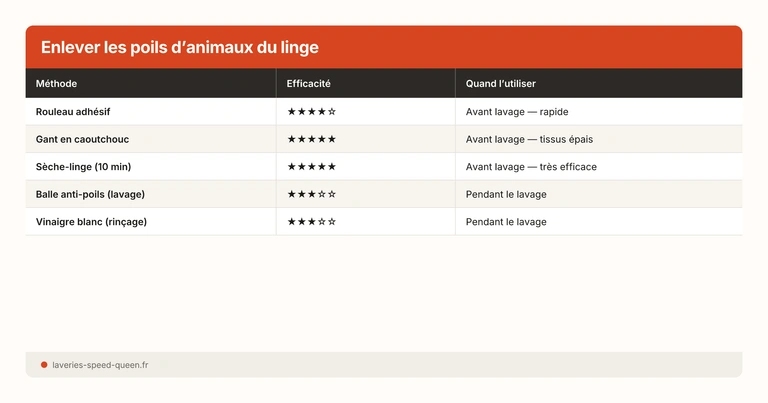
1. The Lint Roller — Simple and Effective
The lint roller (adhesive roller type) is the classic. It works well on clothes and small surfaces — shirts, trousers, cushions. On a large throw covered in hair, it quickly becomes tedious and uses a lot of adhesive sheets.
Tip: tear-off sheet rollers are more practical than reusable silicone rollers, which lose their grip when overloaded. Always roll in the same direction — back and forth re-deposits some of the hair.
2. The Damp Glove or Rubber Glove — Ideal for Large Surfaces
Put on a rubber household glove (or a simple latex glove) and run your hand over the fabric in broad strokes, always in the same direction. The hairs clump into rolls that are easy to pick up. This is the fastest method for large textiles such as throws, blankets and sheets.
Alternative: if you do not have a glove, a slightly damp, wrung-out sponge produces a similar effect. The principle is the same: create slight friction that lifts hairs without pushing them in.
3. The 10-Minute Tumble Dryer (Cool Air Programme) — Most Effective for Large Volumes
This is the technique recommended by Maytag and Consumer Reports. Put the dry laundry in the tumble dryer for 10 minutes on a cool air or no-heat programme. The mechanical tumbling of the drum loosens the hairs, and the lint filter captures them. Empty the filter immediately afterwards — it will be well loaded.
This method is particularly effective on bulky textiles (throws, blankets, pet beds) where a lint roller would be too slow. At the laundromat, you can use a large-capacity tumble dryer to treat several items at once.
4. The Electrostatic Brush — For Delicate Fabrics
Electrostatic fabric brushes (clothes brush type) work on the principle of static electricity: they attract hairs without adhesive or moisture. They are particularly suited to dark clothes, suits and delicate textiles that you do not want to rub. For care of delicate garments, see our delicate textiles guide.
The Method That Works Best: Dry - Wash - Dry
On dry, very hairy laundry, a short tumble dryer cycle before washing helps loosen hairs and send them to the filter, instead of letting them turn into wet clumps in the washing machine.
Maytag recommends exactly this approach on dry laundry: a short tumble dryer cycle, then washing, then final drying. Consumer Reports agrees and advises reducing the mass of hair before the washing machine to avoid clogging it.
| Step | What to do | Why |
|---|---|---|
| 1. Pre-remove while dry | Roller, damp glove, fabric brush, gentle vacuum | Remove the bulk before any water |
| 2. Short tumble dry | 10 min no heat or cool air if the label allows | Loosen some hairs and send them to the filter |
| 3. Washing | Appropriate cycle, do not overload | Finish the cleaning without unnecessary blockage |
| 4. Final drying | Cycle per label + empty filter | Remove remaining hair and avoid dampness |
During Washing: The Habits That Make the Difference
The wash itself can be optimised to maximise removal of remaining hairs.
White Vinegar at the Rinse Stage
Add half a glass of white vinegar↗ to the softener compartment. The vinegar softens the fabric fibres, making it easier for hairs to come loose during tumbling. It plays the same role as fabric softener but without the greasy film that can actually make hairs stick to some fabrics. To learn more about the uses and limits of white vinegar, see our dedicated guide.
Do Not Overload — This Is the Golden Rule
The drum should be filled to two-thirds maximum so that the laundry can tumble freely and hairs have space to come loose. An overloaded machine does not rinse properly, and hairs stay trapped between compressed layers of fabric. For blankets and throws, this is the number one cause of failure.
The Laundry Bag
For small, very hairy items (cat cushions, small blankets), use a fine-mesh laundry bag. The bag traps some of the hairs that come loose during the cycle, preventing them from re-depositing on the rest of the load and migrating into the machine filters. Wash very hairy items separately from everyday laundry.
The Right Programme
Choose a programme with an extra rinse cycle if your machine offers one. Rinsing is when loosened hairs are flushed away — a double rinse makes a real difference. For the right temperatures for each fabric, see our washing temperature guide.
After Washing: Check and Finish
The job does not stop at the end of the wash cycle. Two essential checks:
Inspect the Laundry Before Drying
Before putting the laundry in the tumble dryer (or hanging it out), visually check for hair. If clumps are still visible, give a quick pass with a damp glove. It is easier to remove residual hairs from damp, spun laundry than from dry laundry — they form visible clumps that are easy to grab.
Clean the Machine Filter
After a very hairy load, clean your washing machine filter (if accessible) and run an empty rinse cycle to flush out hairs left in the drum and pipes. On a home machine, this is the action that preserves your appliance long term. If you regularly use your machine for pet laundry, do a full machine clean once a month.
Final Drying
The tumble dryer finishes the job. Hot tumbling (or moderate temperature per the label) loosens the last residual hairs, and the lint filter captures them. Empty the filter immediately after every cycle — a loaded filter loses its effectiveness and slows drying. On very hairy loads, check the filter mid-cycle (after 15 minutes) and empty it if needed. See our drying guide for general best practices.
Which Textiles Are Most Affected?
Throws, blankets, sheets
These are the most heavily loaded textiles if the pet sleeps on them. They often benefit from being treated at the laundromat to avoid overloading a small machine.
Dark clothes and fleece
Hairs cling particularly well and are immediately visible. Dry pre-treatment makes a big difference to the result.
Curtains and covers
They trap hairs over large surfaces. The challenge is as much about volume as about removing the hair itself.
Pet beds and blankets
These are the cases where you most need to remove hair while dry before going near a machine.
Daily Prevention
The best treatment is prevention. A few simple habits significantly reduce the amount of hair reaching your laundry.
Dedicated Blankets for the Pet
Place a dedicated blanket or throw on the areas where your pet lies: sofa, bed, armchair. The hair concentrates on this blanket rather than spreading across all the textiles in the house. Wash this dedicated blanket weekly following the protocol described above. It is easier to treat one very hairy item than ten moderately hairy ones.
Regular Brushing of the Pet
A regularly brushed dog or cat sheds far less hair on your laundry. The frequency depends on the breed and coat type:
- Short hair (labrador, European cat): 1-2 brushings per week
- Long hair (golden retriever, Persian): daily brushing during shedding season, 3-4 times per week the rest of the year
- Shedding season (spring/autumn): increase the frequency regardless of coat type
Managing Living Spaces
- Close bedroom doors if you do not want hair on the bedding.
- Washable sofa cover: much easier to deal with than a fixed-fabric sofa.
- Rugs and carpets: vacuum 2-3 times per week in the pet’s main areas. Hair on the floor ends up on socks, trousers and any laundry left lying around.
When the Laundromat Really Helps
The laundromat is most useful when the problem is no longer a simple hairy T-shirt, but a large volume of bulky or heavily loaded textiles.
The honest laundromat angle
A good home machine can already help with a small batch of clothes. The real value of the laundromat shows especially with throws, curtains, blankets, covers or large pet beds: more drum space, a separate tumble dryer, and less risk of clogging your home machine with an overly hairy load all at once. Find our laundromats to handle these large volumes without overloading your home machine.
What to Avoid
- Putting everything straight in the machine without pre-removing — this is the best way to make the problem worse.
- Overloading the drum — hairs stay trapped and rinsing becomes less effective.
- Forgetting the tumble dryer filter — it must be emptied after every very hairy load, sometimes even mid-cycle for a large throw.
- Using vinegar without checking the machine instructions — some brands advise against repeated use.
- Promising zero hair — the realistic goal is noticeably cleaner fabric, not an absolute miracle in a single pass.
- Mixing hairy laundry with everyday laundry — hairs migrate from one item to another in the drum. Treat very hairy items separately.
Where This Page Stops
This page covers hair. If your main concern is the smell of laundry after drying or storage, read our guide to laundry odours instead. For bulky textiles covered in hair, also see curtains, duvets or the drying guide. If your machine itself needs cleaning after very hairy cycles, follow our machine maintenance guide.
Methodology and Sources
- Consumer Reports, Don’t Let Pet Hair Ruin Your Washer, 21 April 2025, accessed 15 March 2026
- Maytag, 4 Hacks for Removing Pet Hair from Your Laundry, accessed 15 March 2026
Sources and References
- Consumer Reports - Don’t Let Pet Hair Ruin Your Washer (lien externe)
- Maytag - 4 Hacks for Removing Pet Hair from Your Laundry (lien externe)
- Drying guide
- How to wash curtains
- White vinegar and laundry
- How to clean your washing machine
- Delicate textiles guide
- Washing temperature guide
- Laundromat and pets: washing blankets and beds
As an Amazon Partner, we earn a small commission on purchases made via the affiliate links in this article — at no extra cost to you. This helps us maintain this site and produce free guides.
If you mainly have throws, covers, curtains or heavily loaded pet beds, our laundromats in Blagnac, Croix-Daurade and Montaudran help you handle these large volumes without overloading your home machine. The idea is not to replace all home washes, but to use the right capacity at the right time.